
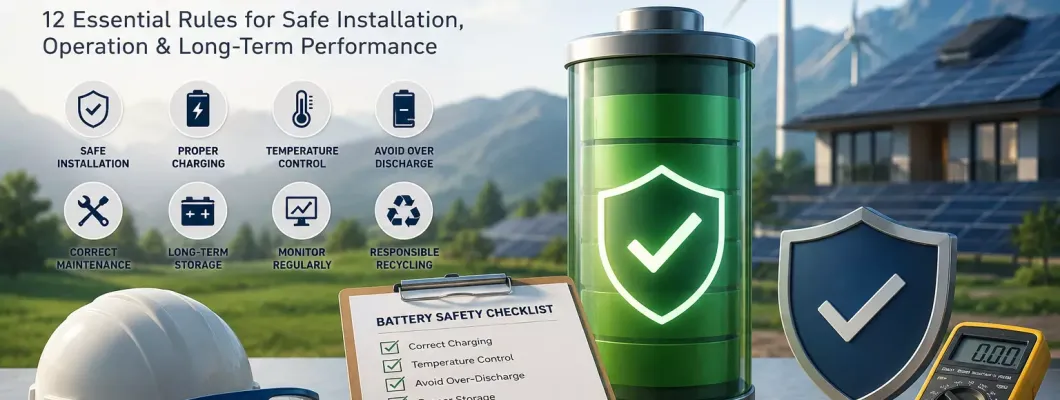
LiFePO4 Battery Safety Guide
Lithium Iron Phosphate (LiFePO4) batteries are one of the safest and longest-lasting energy storage technologies available today. However, improper installation or operation can still result in equipment damage, reduced battery life, or even safety hazards.
Whether you're installing a 48V home energy storage battery, solar battery system, or off-grid battery bank, following proper operating procedures is essential.
In this guide, we'll explain the most important safety practices recommended by Docan Energy engineers.
1. Always Use a Dedicated LiFePO4 Charger
One of the biggest mistakes users make is charging LiFePO4 batteries with chargers designed for lead-acid batteries.
Always use:
CC/CV charging profile
Correct voltage settings
Compatible charger recommended for LiFePO4 batteries
Never:
Reverse polarity
Overcharge
Use unknown chargers
Incorrect charging may permanently damage both the battery cells and the Battery Management System (BMS).
2. Charge Within the Recommended Temperature Range
Temperature greatly affects lithium battery performance.
General recommendations:
Never charge below 0°C (32°F)
Avoid charging at excessively high temperatures
Follow the temperature limits listed in your battery specification
Many modern Docan batteries include low-temperature charging protection, but users should still avoid forcing a charge outside the safe range.
3. Avoid Deep Discharge
Although LiFePO4 batteries tolerate deep cycling better than other battery chemistries, repeatedly discharging the battery to extremely low voltage shortens battery life.
Best practice:Recharge soon after use;Do not leave the battery discharged for long periods
Recharge within 12 hours after low-voltage protection activates
If a battery reaches 0V, permanent damage may occur and recovery is not guaranteed.
4. Store Batteries Correctly
If the battery will not be used for several months:Store indoor; Keep the battery dry; Avoid direct sunlight;Recharge periodically
Maintain the recommended Storage State of Charge (SOC)
Improper storage is one of the leading causes of reduced battery capacity.
5. Follow the Correct Power-On Sequence
Improper wiring can damage the BMS.
Recommended sequence:
Connect B-
Connect voltage sensing wires
Connect B+
Connect load or charger
Power-off should follow the reverse order.
Never connect or disconnect cables while the system is energized.
6. Never Ignore Physical Damage
Before every installation, inspect the battery carefully.Stop using the battery if you notice:Swellin/Dents/Cracks/Leaking/Burning smell/Excessive heat
Mechanical damage can compromise battery safety even if the battery still appears functional.
7. Parallel Connection Requires Care
Many users expand their solar storage system by connecting multiple batteries.Before connecting batteries in parallel:
Use identical battery models/Match battery voltage/Match State of Charge (SOC)/Assign unique communication addresses/Power on the master battery first
Never connect different battery brands or capacities in the same system. Series connection is prohibited unless specifically supported.
8. Installation Should Be Performed by Qualified Personnel
High-voltage battery systems should always be installed by trained professionals. Installers should:
Wear insulated protective equipment/Verify zero voltage before maintenance/Ensure proper grounding/Follow local electrical regulations
Professional installation improves both safety and system reliability.
9. Know the Signs of Thermal Runaway
Although LiFePO4 batteries are among the safest lithium technologies, users should recognize warning signs.Watch for:Swelling/Smoke/Burning smell/Hissing sounds/Rapid temperature increase
If any of these occur:Stop using the battery immediately/Move away from the battery/Contact emergency services if necessary/Contact Docan technical support
Never attempt to repair a damaged lithium battery yourself.
10. Use the BMS Software Carefully
The Battery Management System (BMS) monitors battery health and communicates with compatible inverters.
Before troubleshooting communication issues:Verify communication cables/Check protocol settings/Confirm DIP switch configuration/Connect only the master battery to the inverter in parallel systems
Do not modify advanced BMS parameters unless authorized by Docan Energy, as unauthorized changes may damage the battery and void the warranty.
11. Monitor Battery Data Regularly
Battery monitoring helps identify issues before they become serious.
Recommended monitoring items include: Voltage,Current,Temperature,State of Charge (SOC),Battery alarms,Charge/discharge history
Keeping complete operating records also supports faster technical support and warranty evaluation.
12. Recycle Batteries Responsibly
LiFePO4 batteries contain recyclable materials.
At the end of service life:
Do not dispose of batteries with household waste
Follow local recycling regulations
Use certified recycling facilities
Responsible recycling protects both people and the environment.
Frequently Asked Questions (FAQ)
Can I charge a LiFePO4 battery below freezing?
No. Charging below 0°C (32°F) can permanently damage lithium cells unless the battery is equipped with an active heating system designed for low-temperature charging.
Can different LiFePO4 batteries be connected in parallel?
No. Only batteries with the same model, voltage, capacity, and similar state of health should be connected in parallel.
How often should I recharge a stored battery?
Recharge the battery periodically according to the manufacturer's recommendations to compensate for self-discharge and prevent over-discharge.
What should I do if the battery swells?
Immediately stop using the battery, disconnect it safely, isolate it from combustible materials, and contact Docan Energy Technical Support.
Final Thoughts
A LiFePO4 battery is a long-term investment. Following proper charging, installation, storage, and maintenance practices not only maximizes battery lifespan but also ensures safe operation of your energy storage system.If you need assistance with battery installation, inverter compatibility, or BMS communication, the Docan Energy technical support team is ready to help.
From Docan Team



Amy Zheng, a lithium battery sales expert with over 11 years of experience, specializes in LiFePO4 batteries, battery management systems (BMS), and DIY energy storage solutions. As a trusted creator on Facebook and YouTube, she shares honest insights with more than 14,000 followers, offering reliable service and establishing Docan Amy as a go-to resource in the field.
Leave a Comment